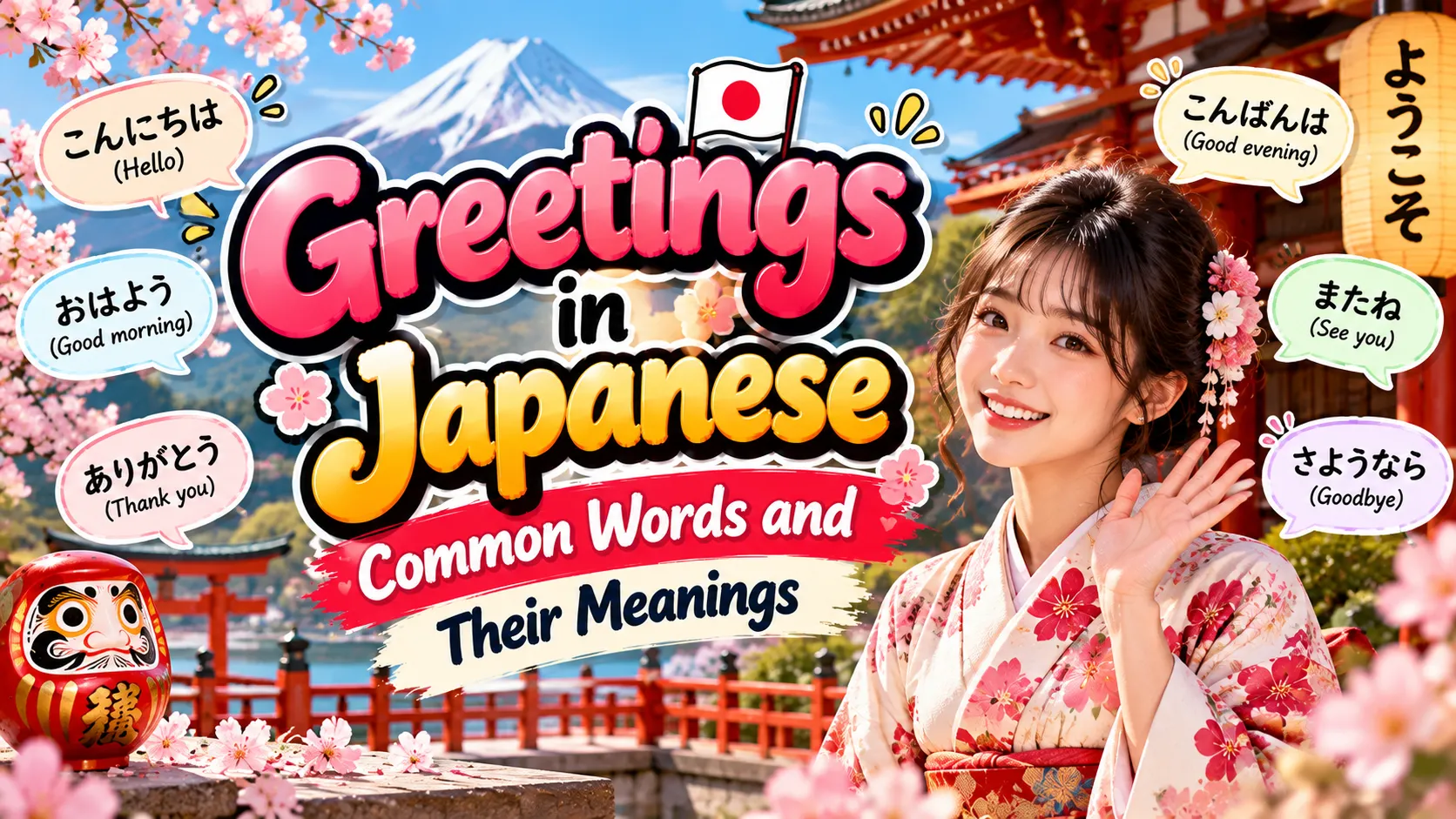
Learning greetings in Japanese is a great way to begin exploring the Japanese language and culture. Whether you are planning a trip to Japan, watching anime, studying Japanese, or chatting with Japanese-speaking friends, knowing how to greet people can help you communicate more naturally.
Japanese greetings vary depending on the time of day, the relationship between speakers, and the level of politeness required. For example, Konnichiwa is a familiar daytime greeting, while Ohayō gozaimasu is a polite way to say good morning. You will also encounter casual greetings, respectful expressions, and phrases used when meeting someone for the first time.
This guide covers common Japanese greetings with their English meanings, pronunciation, and examples, so you can learn when and how to use each expression.
Common Japanese Greetings 👋
These everyday Japanese greetings are useful for beginners and travelers. Learning a few basic phrases will help you start conversations and sound more comfortable in everyday situations.
- こんにちは (Konnichiwa) — Hello / Good afternoon
- おはよう (Ohayō) — Good morning (casual)
- おはようございます (Ohayō gozaimasu) — Good morning (polite)
- こんばんは (Konbanwa) — Good evening
- やあ (Yā) — Hi / Hey (casual)
- もしもし (Moshi moshi) — Hello (usually on the phone)
- 元気? (Genki?) — How are you? (casual)
- お元気ですか (Ogenki desu ka?) — How are you? (polite)
- ありがとう (Arigatō) — Thank you (casual)
- ありがとうございます (Arigatō gozaimasu) — Thank you (polite)
Good Morning in Japanese 🌅
Japanese has casual and polite ways to say good morning. The expression you choose often depends on whether you are talking to a friend, family member, coworker, teacher, or someone you do not know well.
- おはよう (Ohayō) — Good morning; casual
- おはようございます (Ohayō gozaimasu) — Good morning; polite
- おはよー (Ohayō) — A casual, informal spelling often seen in messages
- おはよう!(Ohayō!) — Good morning!
- おはようございます、先生 (Ohayō gozaimasu, sensei) — Good morning, teacher
Example:
A: おはよう!(Ohayō!)
B: おはよう!(Ohayō!)
Meaning:
A: Good morning!
B: Good morning!
Hello and Good Afternoon in Japanese ☀️
こんにちは (Konnichiwa) is one of the most widely recognized Japanese greetings. It is commonly used during the daytime when meeting someone or starting a conversation.
- こんにちは (Konnichiwa) — Hello / Good afternoon
- やあ (Yā) — Hey (casual)
- どうも (Dōmo) — Hi / Hello; also used to express thanks, depending on context
- こんにちは、元気ですか (Konnichiwa, genki desu ka?) — Hello, how are you?
- こんにちは、はじめまして (Konnichiwa, hajimemashite) — Hello, nice to meet you
Example:
こんにちは。お元気ですか。
Konnichiwa. Ogenki desu ka?
Meaning: Hello. How are you?
Good Evening in Japanese 🌙
When greeting someone in the evening, Japanese speakers commonly use こんばんは (Konbanwa). It is suitable for polite everyday conversations, including meeting neighbors, acquaintances, or people in public.
- こんばんは (Konbanwa) — Good evening
- こんばんは、元気ですか (Konbanwa, genki desu ka?) — Good evening, how are you?
- こんばんは、みなさん (Konbanwa, minasan) — Good evening, everyone
- こんばんは!(Konbanwa!) — Good evening!
Remember that konbanwa is a greeting, not usually a way to say goodbye at the end of the evening.
Casual Japanese Greetings Between Friends 😎
When speaking with friends, classmates, or people you know well, casual Japanese greetings can sound more natural than formal expressions. The exact wording also depends on age, personality, and the situation.
- やあ (Yā) — Hey
- よっ (Yo) — Hey (very casual)
- おっす (Ossu) — Hey; informal, often associated with casual or masculine speech
- 元気? (Genki?) — How are you?
- 最近どう? (Saikin dō?) — How have things been lately?
- 久しぶり (Hisashiburi) — Long time no see
- どうも (Dōmo) — Hi / Thanks, depending on context
- おーい (Ōi) — Hey! (calling someone’s attention)
Example:
久しぶり!最近どう?
Hisashiburi! Saikin dō?
Meaning: Long time no see! How have you been?
Polite Japanese Greetings 🙇
Politeness is an important part of Japanese communication. When speaking with a stranger, an older person, a teacher, or a professional contact, polite expressions are usually the safest choice.
- おはようございます (Ohayō gozaimasu) — Good morning
- こんにちは (Konnichiwa) — Hello / Good afternoon
- こんばんは (Konbanwa) — Good evening
- お元気ですか (Ogenki desu ka?) — How are you?
- はじめまして (Hajimemashite) — Nice to meet you
- よろしくお願いします (Yoroshiku onegaishimasu) — A polite expression used when beginning a relationship or asking for goodwill and cooperation
- 失礼します (Shitsurei shimasu) — Excuse me; used when entering or leaving certain situations
- ありがとうございます (Arigatō gozaimasu) — Thank you very much
A useful rule for beginners is to use polite forms until you know that a more casual style is appropriate.
How to Say “How Are You?” in Japanese 💬
Japanese speakers do not always ask “How are you?” every time they meet someone. Still, several expressions are useful when checking on a friend or starting a conversation.
- 元気? (Genki?) — How are you? (casual)
- 元気ですか (Genki desu ka?) — Are you well? / How are you?
- お元気ですか (Ogenki desu ka?) — How are you? (polite)
- 最近どう? (Saikin dō?) — How have you been lately?
- 調子はどう? (Chōshi wa dō?) — How are things going?
- 元気だよ (Genki da yo) — I’m good (casual)
- 元気です (Genki desu) — I’m well (polite)
- まあまあです (Mā mā desu) — I’m okay / So-so
Example:
A: 元気ですか。
Genki desu ka?
B: はい、元気です。ありがとう。
Hai, genki desu. Arigatō.
Meaning:
A: How are you?
B: Yes, I’m well. Thank you.
Japanese Greetings for Meeting Someone for the First Time 🤝
When you meet someone for the first time, はじめまして (Hajimemashite) is the standard expression for beginning an introduction. It is often followed by your name and よろしくお願いします (Yoroshiku onegaishimasu).
- はじめまして (Hajimemashite) — Nice to meet you
- 私はアレックスです (Watashi wa Arekkusu desu) — I’m Alex
- よろしくお願いします (Yoroshiku onegaishimasu) — A polite expression of goodwill when meeting someone
- お会いできてうれしいです (Oai dekite ureshii desu) — I’m happy to meet you
- こちらこそ (Kochira koso) — Likewise / The pleasure is mine, depending on context
Example introduction:
はじめまして。アレックスです。よろしくお願いします。
Hajimemashite. Arekkusu desu. Yoroshiku onegaishimasu.
Meaning: Nice to meet you. I’m Alex. It’s a pleasure to meet you.
Japanese Greetings for Saying Goodbye 👋
Japanese has several ways to say goodbye, and the best choice depends on whether you will see the person again soon, whether you are leaving work, or whether the situation is casual.
- さようなら (Sayōnara) — Goodbye
- じゃあね (Jā ne) — See you (casual)
- またね (Mata ne) — See you later
- また明日 (Mata ashita) — See you tomorrow
- また今度 (Mata kondo) — See you next time
- バイバイ (Baibai) — Bye-bye
- お先に失礼します (Osaki ni shitsurei shimasu) — Excuse me for leaving before you; common at work
- お疲れさまでした (Otsukaresama deshita) — A respectful expression used to acknowledge someone’s work or effort, often when leaving work
Although sayōnara means “goodbye,” it can sound more final than “see you later” in some everyday situations. Friends often use mata ne or jā ne instead.
Japanese Greetings Used on the Phone 📱
Japanese has a special greeting for answering the phone. Unlike English, where “hello” works in many settings, もしもし (Moshi moshi) is commonly used during telephone conversations.
- もしもし (Moshi moshi) — Hello (on the phone)
- はい、もしもし (Hai, moshi moshi) — Hello? (answering a call)
- お世話になっております (Osewa ni natte orimasu) — A common polite business expression acknowledging an ongoing relationship
- 失礼します (Shitsurei shimasu) — Excuse me / Goodbye in certain phone contexts
- では、失礼します (Dewa, shitsurei shimasu) — Well then, goodbye (polite)
In business calls, speakers often introduce themselves or their organization instead of relying on moshi moshi alone.
Japanese Greetings for Special Occasions 🎉
Some Japanese greetings are tied to holidays, celebrations, or particular times of year. These phrases are useful when sending messages, greeting coworkers, or celebrating with Japanese-speaking friends.
- お誕生日おめでとうございます (Otanjōbi omedetō gozaimasu) — Happy birthday (polite)
- おめでとう (Omedetō) — Congratulations
- あけましておめでとうございます (Akemashite omedetō gozaimasu) — Happy New Year
- メリークリスマス (Merī Kurisumasu) — Merry Christmas
- よいお年を (Yoi otoshi o) — Have a good New Year; said before the new year begins
- いってらっしゃい (Itterasshai) — Take care / See you when you return; said to someone leaving home
- いってきます (Ittekimasu) — I’m leaving and will be back; said when leaving home
- ただいま (Tadaima) — I’m home
- おかえり (Okaeri) — Welcome back (casual)
- おかえりなさい (Okaerinasai) — Welcome home / Welcome back (polite)
Japanese Greetings in Anime and Everyday Pop Culture 🎌
Anime and Japanese entertainment feature a wide range of greetings. Some are ordinary expressions used in real life, while others are exaggerated or associated with particular characters and speaking styles.
- おはよう (Ohayō) — Good morning
- こんにちは (Konnichiwa) — Hello
- やあ (Yā) — Hey
- 久しぶり (Hisashiburi) — Long time no see
- 元気? (Genki?) — How are you?
- じゃあね (Jā ne) — See you
- またね (Mata ne) — See you later
- おっす (Ossu) — Hey; very informal
- 先輩 (Senpai) — Senior or more experienced person; not a greeting by itself
- 先生 (Sensei) — Teacher or instructor; a title, not a greeting by itself
Anime can be a helpful way to hear Japanese in context, but characters sometimes use slang, dramatic expressions, or speech styles that may not suit formal real-life conversations.
Common Japanese Greetings With Pronunciation Tips 🗣️
Japanese pronunciation becomes easier when you pay attention to its vowel sounds and syllable rhythm. The following approximations can help English speakers get started, although listening to native speakers is the best way to improve.
- Konnichiwa (こんにちは): kohn-nee-chee-wah
- Ohayō (おはよう): oh-hah-yoh
- Ohayō gozaimasu (おはようございます): oh-hah-yoh goh-zah-ee-mahs
- Konbanwa (こんばんは): kohn-bahn-wah
- Arigatō (ありがとう): ah-ree-gah-toh
- Hajimemashite (はじめまして): hah-jee-meh-mah-shee-teh
- Sayōnara (さようなら): sah-yoh-nah-rah
- Mata ne (またね): mah-tah neh
- Moshi moshi (もしもし): moh-shee moh-shee
- Ogenki desu ka (お元気ですか): oh-gehn-kee dehs kah
The macron in words such as ohayō and arigatō indicates a long vowel. Try to keep the vowel smooth rather than adding an extra syllable.
Tips for Using Japanese Greetings Naturally 🌱
Knowing the words is only the first step. Understanding when to use each greeting helps you sound more natural and respectful.
- Match your level of politeness: Use ohayō gozaimasu with teachers, colleagues, and people you do not know well. Use ohayō with close friends.
- Choose greetings by context: Konnichiwa is commonly used during the daytime, while konbanwa is used in the evening.
- Remember the special phone greeting: Moshi moshi is common on personal phone calls but is not the standard greeting for every professional interaction.
- Use introductions appropriately: Hajimemashite is for meeting someone for the first time.
- Learn everyday expressions: Phrases such as itterasshai and tadaima are common in Japanese homes.
- Listen to native pronunciation: Videos, podcasts, and language-learning resources can help you understand rhythm and vowel length.
- Do not worry about perfection: Start with a few useful greetings and build confidence through practice.
Frequently Asked Questions About Japanese Greetings ❓
What is the most common greeting in Japanese?
こんにちは (Konnichiwa) is one of the most widely recognized Japanese greetings and means “hello” or “good afternoon.” It is commonly used in daytime situations.
How do you say hello in Japanese?
You can say こんにちは (Konnichiwa) in many daytime situations. With friends, you might also hear やあ (Yā) or よっ (Yo), both of which are casual.
How do you say good morning in Japanese?
Say おはよう (Ohayō) to friends and family in casual settings. Use おはようございます (Ohayō gozaimasu) when you want to sound more polite or respectful.
How do you say good evening in Japanese?
The usual expression is こんばんは (Konbanwa). It is used when greeting someone in the evening.
What does konnichiwa mean?
こんにちは (Konnichiwa) is a standard Japanese daytime greeting, usually translated as “hello” or “good afternoon.”
What does moshi moshi mean?
もしもし (Moshi moshi) is a greeting commonly used when answering or starting a personal phone conversation in Japanese.
How do you say goodbye in Japanese?
Common options include さようなら (Sayōnara) for “goodbye,” またね (Mata ne) for “see you later,” and じゃあね (Jā ne) for a casual “see you.”
Is Japanese greeting etiquette important?
Yes. Politeness, familiarity, and context influence which greeting sounds appropriate. When unsure, choose a polite expression and follow the other person’s lead.
Conclusion 🌸
Learning greetings in Japanese gives you a practical foundation for conversations, travel, study, and cultural understanding. Start with the essentials: konnichiwa for hello, ohayō gozaimasu for good morning, konbanwa for good evening, and mata ne for a casual goodbye.
As you become more comfortable, explore polite introductions, telephone greetings, special-occasion expressions, and everyday phrases used at home. Practicing a few expressions consistently will help you recognize Japanese greetings and use them with greater confidence.