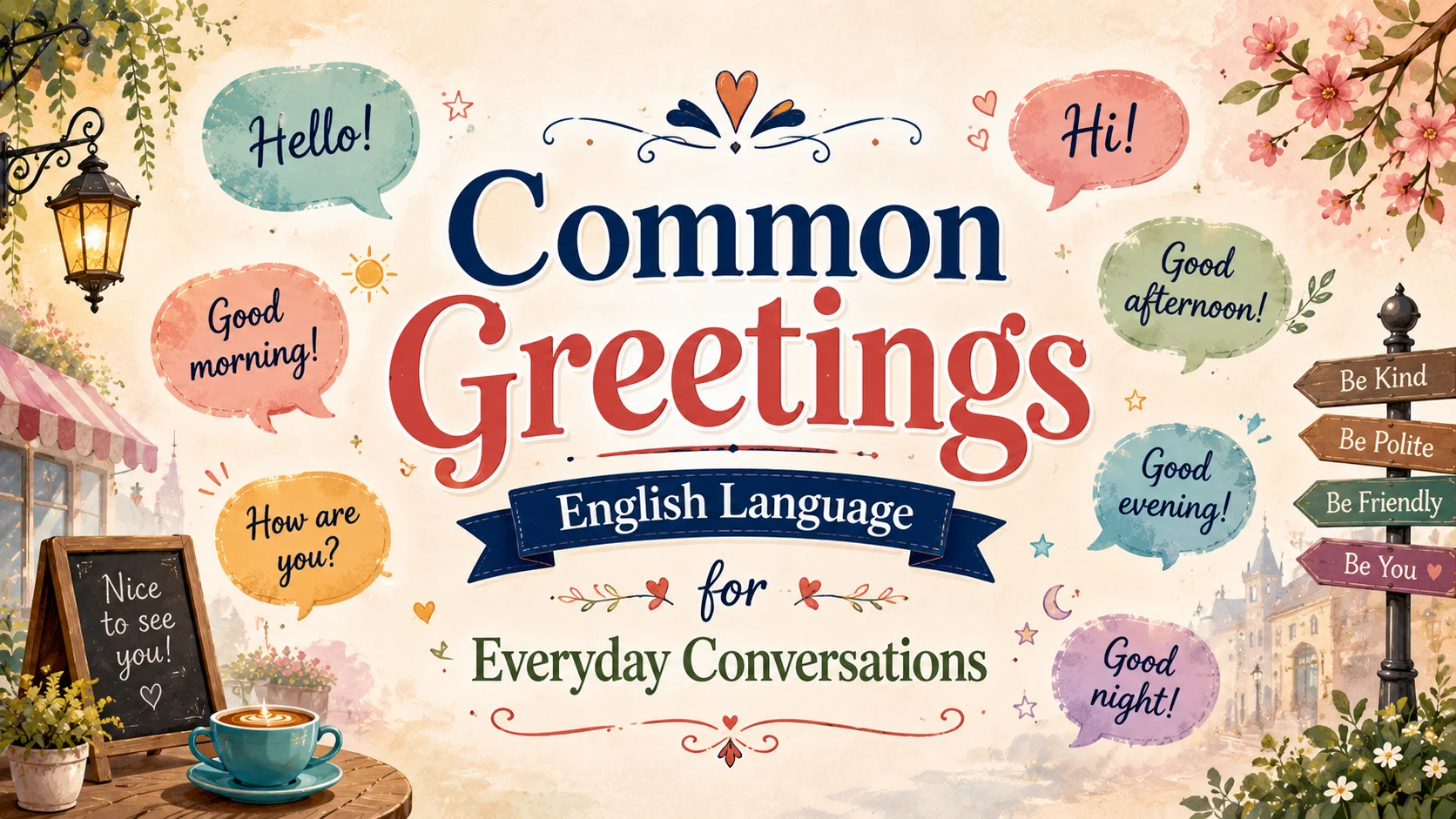
Common greetings English language speakers use every day are the foundation of every conversation. They are the first words we speak when we meet someone, and they set the tone for everything that follows. A simple “hello” or “good morning” can open doors, build relationships, and show respect. Understanding the right greeting for the right situation is key to making a good impression in any English-speaking environment.
This comprehensive guide covers everything you need to know about common greetings English language speakers use in both formal and informal settings. From professional business greetings to casual slang, from time-specific greetings to regional variations, you will find everything here. Whether you are learning English as a second language, preparing for a business meeting, or just want to improve your social skills, this guide has you covered with the most essential common greetings English language learners need to master.
What Are Common Greetings in English Language Speakers Use?
Common greetings English language speakers use are words or phrases used when meeting someone. They are a way to show respect, friendliness, and goodwill. The greeting you choose depends on several factors, including the context, the person’s age, your relationship with them, and the time of day.
Common greetings in English speakers use serve many purposes. They acknowledge another person’s presence. They show that you are open to communication and They set the tone for the rest of the conversation. A warm greeting can make someone feel welcome. A formal greeting shows respect. A casual greeting shows familiarity and comfort. Mastering Common greetings in English speakers use is essential for effective communication.
Formal Common Greetings in English Language Speakers Use
Formal common greetings English language speakers use are typically used in professional settings, when meeting someone for the first time, or when speaking to someone older or in a position of authority. These greetings show respect and professionalism.
Good Morning
Good morning is one of the most common common greetings English language speakers use before noon. It is a safe and polite choice for starting a conversation with a colleague, client, or stranger in the morning.
Good morning, Mr. Smith. How are you today?
Good morning, everyone. Welcome to the meeting.
Good morning, ma’am. Can I help you with something?
Good Afternoon
Good afternoon is another essential common greetings English language speakers use from noon until around 6 p.m. It is a standard, respectful greeting for the middle of the day.
Good afternoon, Doctor. Thank you for seeing me.
Good afternoon, ladies and gentlemen. Thank you for joining us.
Good afternoon, sir. How may I assist you?
Good Evening
Good evening is among the common greetings English language speakers use after 6 p.m. or after sunset. It is used when arriving at an event or meeting someone late in the day.
Good evening, welcome to our event.
Good evening, everyone. Please come in and make yourselves comfortable.
Good evening, madam. Your table is ready.
Nice to Meet You
Nice to meet you is one of the most important Common greetings in English speakers use when meeting someone for the first time. It is essential for making a polite and courteous first impression.
Nice to meet you. I have heard so much about you.
Pleased to meet you. I am honored to finally meet you.
It is a pleasure to meet you. Thank you for coming today.
How Do You Do?
How do you do is a very formal Common greetings in English speakers use in extremely formal business settings. The proper reply is simply “How do you do?”.
How do you do? I am delighted to make your acquaintance.
How do you do? Thank you for having me.
Dear
Dear is one of the most common common greetings English language speakers use in professional emails and letters. It indicates respect and maintains a polite, personal tone in written communication.
- Dear Mr. Johnson, I am writing to inquire about…
- Dear Dr. Williams, Thank you for your time.
- Dear Hiring Manager, I am submitting my application for…
Informal Common Greetings in English Language Speakers Use
Informal common greetings English language speakers use are used with friends, family, and people you know well in casual situations. They are warm, friendly, and show familiarity.
Hi
Hi is one of the most versatile Common greetings in English speakers use for any informal or semi-formal situation. It is a standard, friendly way to greet almost anyone you know casually.
- Hi, how are you doing today?
- Hi, it is good to see you again.
- Hi, I was just thinking about you.
Hello
Hello is slightly more formal than “hi” but still works in most casual and semi-formal situations. It is a safe and friendly choice among common greetings in English language speakers.
- Hello, how are you enjoying the party?
- Hello, I have not seen you in ages.
- Hello, is everything going well?
Hey
Hey is a casual, friendly greeting among common greetings in English language speakers for people you have already met. It can also be used to get someone’s attention.
- Hey, what are you up to this weekend?
- Hey, did you see the game last night?
- Hey, can I talk to you for a minute?
How’s It Going?
How’s it going is a casual way common greetings in English language speakers use to ask how someone is. The reply is often a simple “good” or “fine”.
- How’s it going? I hope everything is okay.
- How’s it going? You look tired.
- How’s it going? Long time no see.
How Are You Doing?
- How are you doing is another casual way common greetingsin English language speakers use to ask how someone is.
- How are you doing? I hope you are well.
How are you doing? You seem happy today.
How are you doing? Is everything alright?
What’s Up?
What’s up is a very casual greeting common greetings in English language speakers use asking what someone is doing or if anything new is happening. The reply is often “nothing” or “not much”.
What’s up? Anything exciting happening?
What’s up? I have not heard from you in a while.
What’s up? Are you free this weekend?
What’s New?
What’s new is similar to “What’s up?” and is among the common greetings in English language speakers use to ask if there is anything new or exciting.
- What’s new? Have you heard from anyone lately?
- What’s new? Anything I should know about?
- What’s new? How is everything going?
Long Time No See
Long time no see is used by Common greetings in English speakers when they have not seen someone in a while.
- Long time no see! Where have you been?
- Long time no see! You look great.
- Long time no see! We need to catch up.
Good to See You
Good to see you is used by Common greetings in English speakers when they are happy to see someone, especially after some time apart.
- Good to see you! I have missed you.
- Good to see you! I hope you are doing well.
- Good to see you! It feels like forever.
Time-Specific Common Greetings in English Language Speakers Use
Time-specific common greetings English language speakers use are based on the time of day. They are polite and show awareness of the time.
Morning Greetings
Good morning is used from sunrise until noon. It is the most common morning greeting among Common greetings in English speakers.
Morning! (short for Good morning)
Good morning, sunshine!
Rise and shine!
Top of the morning to you! (Irish, informal)
Afternoon Greetings
Good afternoon is used from noon until early evening. It is the standard afternoon greeting among common greetings English language speakers.
Good afternoon, everyone.
Afternoon! (informal)
Good afternoon, beautiful day, isn’t it?
Evening Greetings
Good evening is used from early evening until bedtime. It is the standard evening greeting among Common greetings in English speakers.
Good evening, welcome.
Evening! (informal)
Good evening, I hope you are having a nice day.
Nighttime Greetings
Good night is used by common greetings English language speakers when they are leaving someone or going to bed. It is not used as a greeting when arriving somewhere.
Good night, sleep well.
Night! (informal)
Good night, I will see you tomorrow.
Slang and Regional Common Greetings English Language Speakers Use
Slang common greetings English language speakers use are extremely informal and are often specific to certain regions.
American Slang Greetings
- Yo! is an extremely informal American greeting among common greetings English language speakers that comes from 1990’s hip-hop slang.
- Howdy! is an informal abbreviation of “how do you do,” common in parts of the U.S. and Canada.
- Sup? is a shortened version of “What’s up?” and is very casual.
- Hey there! is a friendly and informal greeting.
- What’s good? is a casual way to ask “How are you?” or “What’s happening?”
British Slang Greetings
- Alright mate? is a common, informal greeting in Britain, often used in place of “hello.”
- You alright? is similar to “Alright mate?” and is very common in Britain.
- How’s things? is a casual British way to ask “How are things going?”
- Cheers! is used in Britain as both a greeting and a way to say thank you.
Australian Slang Greetings
G’day mate! is a casual Australian abbreviation of “good day.” It is one of the most famous Australian common greetings English language speakers use.
How ya goin’? is a casual Australian way to ask “How are you going?”
Irish Slang Greetings
Top of the morning to you! is an Irish greeting among common greetings English language speakers that is somewhat stereotypical but still used informally.
How’s the craic? asks “How’s the fun or gossip?” in Irish slang.
Written Common Greetings English Language Speakers Use
Written Common greetings in English speakers use require a slightly different format. They are more structured than spoken greetings.
Formal Written Greetings
- Dear [Recipient’s Name] is a standard, respectful greeting for formal letters and emails.
- To whom it may concern is a very formal, impersonal greeting for when you do not know the recipient’s name.
- Dear Sir or Madam is another formal option for unknown recipients.
Semi-Formal Written Greetings
- Hello [Recipient’s Name] is a semi-formal email greeting that is less formal than “Dear.”
- Hi [Recipient’s Name] is a casual but still professional email greeting.
- Good morning/afternoon [Recipient’s Name] is a polite and time-specific email greeting.
Informal Written Greetings
Hey [Recipient’s Name] is a casual email or text greeting for friends and close colleagues.
Hi there! is a friendly and informal greeting.
Common greetings in English Speakers Use in Different Situations
Different situations call for different common greetings English language speakers use.
Workplace Greetings
Good morning, Mr. Johnson. (formal)
Hello, Susan. (semi-formal)
Hey, Mike, how’s it going? (informal)
Social Gatherings
Hey, great to see you!
Hello, I don’t think we have met.
Hi, I am Sarah. Nice to meet you.
Meeting New People
Hello, I am Alex. Nice to meet you.
Hi, I do not think we have met before.
Good afternoon, my name is Maria.
Customer Service
Good morning, welcome to our store.
Hello, how may I help you today?
Good afternoon, thank you for calling.
Phone Greetings
Hello, this is [name] speaking.
Good morning, [company name], how can I help you?
Hey! How are you doing? (personal)
Responding to Common greetings in English Speakers Use
Knowing how to respond to a greeting is just as important as knowing how to give one.
Responding to Formal Greetings
- Respond to “Good morning” with “Good morning” or “Good morning, how are you?”
- Respond to “Nice to meet you” with “Nice to meet you too” or “The pleasure is mine.”
- Respond to “How do you do?” with “How do you do?”
Responding to Informal Greetings
- Respond to “Hi” or “Hello” with “Hi” or “Hello” back.
- Respond to “How’s it going?” with “Good, you?” or “Fine, how about you?”
- Respond to “What’s up?” with “Nothing much” or “Not much, you?”
- Respond to “Long time no see” with “I know, it has been too long” or “Yes, I have missed you.”
Common Mistakes to Avoid with Common Greetings English Language Speakers Use
- Many learners make mistakes with common greetings English language speakers use. Here are some to avoid.
- Using “Good night” as a greeting when arriving somewhere. Use “Good evening” instead.
- Being too casual with someone you do not know. Use formal greetings with strangers, elders, and superiors.
- Being too formal with friends. Formal greetings with friends can seem cold or distant.
- Forgetting to respond. When someone greets you, always respond. It is polite and shows respect.
- Using the wrong time-specific greeting. Use “Good morning” before noon, “Good afternoon” from noon to 6 p.m., and “Good evening” after 6 p.m.
How to Choose the Right Common Greetings English Language Speakers Use
Choosing the right common greetings English language speakers use depends on several factors.
- Consider the time of day. Use time-specific greetings when appropriate.
- Consider the person’s age. Older people usually prefer formal greetings.
- Consider your relationship. Use formal with strangers, informal with friends.
- Consider the setting. Formal in professional settings, informal in social settings.
- Consider the culture. Some cultures prefer formal greetings. Others are more casual.
Frequently Asked Questions
What Is the Most Common Greeting English Language Speakers Use?
“Hello” and “Hi” are the most common greetings English language speakers use. “Good morning,” “Good afternoon,” and “Good evening” are also widely used, especially in formal situations and professional settings.
What Is the Difference Between “Good Morning” and “Morning”?
“Morning” is the informal shortened version of “Good morning.” Use “Good morning” in formal or professional situations, while “Morning” is suitable for friends, family, and casual conversations.
When Should I Use “How Do You Do?”
“How do you do?” is a very formal greeting that is less common today. It is mainly used in traditional business settings or formal introductions. The expected response is also “How do you do?”
What Should I Say If I Forget Someone’s Name?
If you forget someone’s name, politely apologize and ask them to remind you. You can say, “I’m sorry, I’ve forgotten your name. Could you remind me?” This approach is respectful and professional.
Is It Rude to Use Informal Greetings with Someone I Don’t Know?
It can be. When meeting someone for the first time, it’s best to start with formal greetings such as “Hello” or “Good morning.” Informal greetings like “Hey” are better suited for friends and people you know well.
What Is the Best Greeting for a Job Interview?
For a job interview, use professional greetings such as “Good morning” or “Good afternoon.” Pair your greeting with a smile and phrases like “Nice to meet you” or “Pleased to meet you.”
How Do I Greet Someone in an Email?
For formal emails, use “Dear [Name].” For semi-formal communication, “Hello [Name]” or “Hi [Name]” works well. Casual emails to friends and close colleagues can begin with “Hey [Name].”
What Does “Good to See You” Mean?
“Good to see you” is a friendly expression that shows happiness when meeting someone, especially after some time apart. It is commonly used among friends, relatives, and colleagues.
Can I Use “Hey” in a Professional Setting?
“Hey” is generally acceptable only with coworkers or colleagues you know well. When communicating with managers, clients, or new contacts, use “Hello” or “Good morning/afternoon” for a more professional impression.
Conclusion
Common greetings in English language speakers use are the foundation of every conversation. From formal “Good morning” to casual “Hey” and regional “Howdy,” knowing the right greeting for the right situation is essential. This guide has covered everything you need to know about common greetings in English language speakers use. You now have the tools to greet anyone with confidence, whether in a formal business meeting, a casual social gathering, or a professional email.
Remember to consider the time of day, the person’s age, your relationship, and the setting when choosing a greeting. Practice using different common greetings English language speakers use in different situations. Soon, choosing the right greeting will feel natural and effortless.
So go ahead. Greet someone today. A simple “hello” can start a beautiful conversation. A warm “good morning” can brighten someone’s day. Your words have power. Use them well.