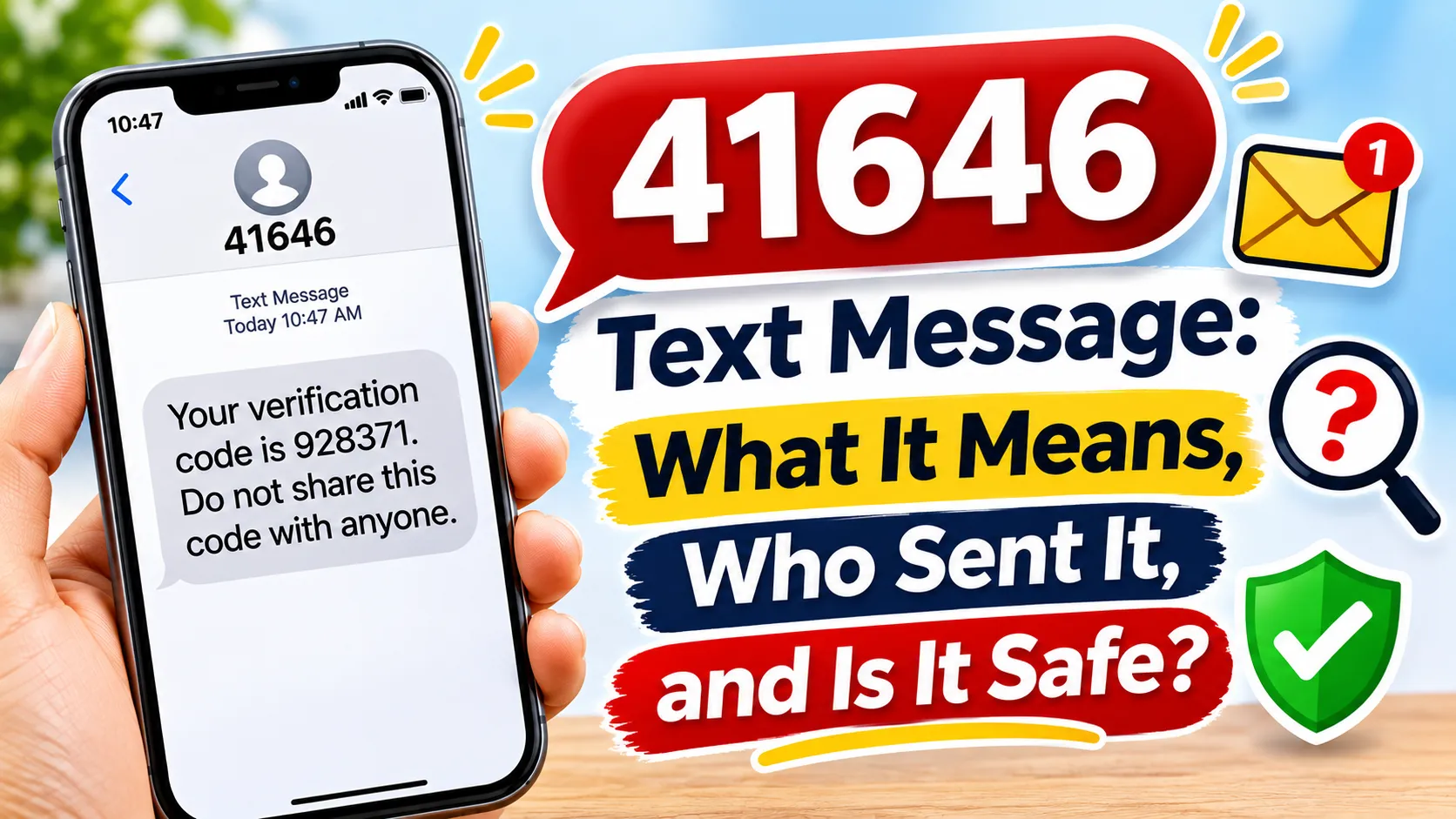
Have you received a text message from 41646 and wondered who sent it or why it appeared on your phone? Receiving an unexpected message from a five-digit number can be confusing, especially when it contains a verification code, account notification, promotional offer, or unfamiliar website link. You may want to know whether the message comes from a legitimate company, an automated messaging service, or a potential scam.
Five-digit sender numbers are commonly associated with SMS short codes, which businesses and organizations use to communicate with customers. However, the number alone does not confirm the sender’s identity or explain the purpose of a message. In this guide, we explore what a 41646 text message could mean, why you might receive one, how to recognize suspicious messages, and what steps you can take to protect your personal information.
📱 What Is a 41646 Text Message?
A 41646 text message is an SMS that displays 41646 as its sender instead of a traditional mobile phone number. Because it contains five digits, it has the format commonly associated with SMS short codes.
Businesses, online platforms, and automated messaging services use short codes to communicate with customers. They may send verification codes, account alerts, promotional messages, appointment reminders, and other automated notifications.
However, the exact organization behind 41646 cannot be reliably identified from the number alone. Different companies use different messaging providers, and sender information does not always reveal the original source.
If you received a message from this number, examine its contents before responding or following any instructions. Look for a recognizable company name, the reason for the communication, and any links or requests for personal information.
🔍 Why Did I Receive a Text From 41646?
There are several possible reasons why 41646 appeared in your messaging inbox. You may have interacted with an online service recently, or someone may have entered your phone number while registering for an account.
Here are some common possibilities:
- Verification code: You may have requested an OTP while signing in to an account.
- Account registration: A website or application may have sent a confirmation after someone entered your phone number.
- Password recovery: Someone may have started a password-reset process using your phone number.
- Account notification: A service may have sent an automated update about account activity.
- Promotional message: A business may have sent a discount, special offer, or marketing announcement.
- Transaction alert: A company may have sent information about a purchase or payment.
- Appointment reminder: A service provider may have used automated messaging to remind you about an upcoming appointment.
- Incorrect phone number: Someone may have accidentally entered your number into an online form.
These are general possibilities rather than confirmed uses of 41646. You should verify the organization mentioned in the message through its official website or application.
🔐 Is 41646 a Verification Code Number?
A message from 41646 could contain a verification code, but the sender number alone does not establish that it belongs to a particular authentication provider.
Many online services use SMS verification to confirm that someone has access to a registered phone number. When a person creates an account, signs in, or resets a password, the platform may send a temporary security code.
If you recently requested a code, check whether the message matches the service you were using.
If you did not request one, take these precautions:
- Never share the code with another person.
- Do not enter it on an unfamiliar website.
- Avoid responding to unexpected requests.
- Review your account’s recent login activity.
- Change your password if you notice suspicious activity.
Receiving an unexpected verification code does not automatically mean someone has accessed your account. Someone may have entered your number by mistake or attempted to begin an account registration or login process.
⚠️ Is 41646 a Scam or Legitimate Text Message?
A five-digit sender number is not automatically legitimate or fraudulent. Many businesses use SMS short codes for genuine communication, but scammers can also send misleading messages that imitate trusted organizations.
The safest approach is to evaluate the message rather than trust its sender number.
Watch for these warning signs:
- The message threatens to suspend your account immediately.
- It requests your password or one-time verification code.
- It contains an unfamiliar or shortened website link.
- It asks for banking or credit card information.
- It promises a prize you never entered to win.
- It demands an unexpected payment.
- It contains unusual spelling or suspicious wording.
- It pressures you to act without giving you time to verify the information.
Legitimate organizations should not ask you to disclose your password or authentication code through an unexpected text conversation.
If the message claims to represent a company you recognize, contact that organization using its official website or application.
📨 What Should You Do After Receiving a 41646 Text?
Your next step depends on whether you recognize the message and expected the communication. If you recently requested a verification code, use it only on the official website or application where you started the process.
If the message is unfamiliar, avoid clicking links or sharing personal information until you verify its source.
Follow these steps:
Read the message carefully: Check whether it mentions a company, service, account, transaction, or subscription.
Review your recent activity: Think about whether you recently registered for an account, made a purchase, or requested a password reset.
Verify the sender: Find the organization’s official website and customer support information independently.
Protect your verification codes: Never share an OTP with another person, even if they claim to represent customer support.
Avoid suspicious links: Do not open unfamiliar websites from unexpected messages.
Report unwanted communication: Use your phone’s spam-reporting feature or your mobile carrier’s reporting service.
Monitor your accounts: Check for unfamiliar login attempts, password changes, or financial transactions.
If you cannot identify the sender, you do not need to respond simply to find out who sent the message.
🔗 Should You Click Links From 41646?
You should avoid clicking unfamiliar links from 41646 until you have verified the message. Fraudulent SMS messages sometimes contain phishing links that direct recipients to fake websites designed to collect passwords, payment information, and personal details.
A message can look professional and still be fraudulent. Scammers may imitate banks, retailers, delivery companies, and popular online platforms to make their messages appear trustworthy.
Before opening a link, consider these questions:
- Were you expecting a message from this organization?
- Does the message clearly identify the sender?
- Does the website address match the company’s official domain?
- Does the link ask for sensitive information?
- Does the message create unnecessary urgency?
- Does it ask you to download an unfamiliar application?
If a message claims that your bank account needs attention, open your banking application directly. If it mentions a delivery, visit the carrier’s official website and enter your tracking information there.
Never use an unverified link to resolve an important account or payment issue.
🛡️ How to Protect Yourself From Suspicious Text Messages
Good digital security habits can help protect your phone number, online accounts, and financial information. You do not need advanced technical knowledge to recognize many common SMS scams.
Follow these safety practices:
- Create strong and unique passwords.
- Enable two-factor authentication where available.
- Never share one-time passwords.
- Keep your phone’s software updated.
- Avoid downloading applications from unfamiliar links.
- Check website addresses before entering personal information.
- Use official customer support channels.
- Monitor important account notifications.
- Report suspicious messages to your carrier.
- Avoid responding to unexpected payment requests.
If you regularly receive unwanted texts, contact your mobile carrier to learn about available spam-filtering options.
📲 How to Block 41646 Text Messages
If messages from 41646 are unwanted or suspicious, you may be able to block the sender through your phone’s messaging application. The exact process depends on your device, operating system, messaging app, and carrier.
How to Block 41646 on iPhone
You can manage unwanted messages through the Messages app on an iPhone.
- Open the Messages application.
- Find the conversation from 41646.
- Open the message thread.
- Tap the sender information at the top.
- Look for available blocking or reporting options.
- Follow the instructions displayed on your screen.
Depending on your device and carrier, you may also have the option to report the message as junk.
How to Block 41646 on Android
Android users can generally block unwanted senders through Google Messages or their phone manufacturer’s messaging application.
- Open your Messages app.
- Find the conversation from 41646.
- Open the conversation menu.
- Select the available block or report option.
- Confirm your selection.
Some Android devices also provide built-in spam protection that can identify potentially unwanted messages.
Blocking one sender may not prevent all future unwanted messages if a messaging service uses multiple short codes.
🚨 What If You Shared Personal Information With 41646?
If you entered sensitive information after following a suspicious text message, take action immediately. The right response depends on what information you shared.
If you shared your password: Change it through the official website or application. Update it anywhere else you reused the same password.
If you shared an OTP: Secure the associated account, review recent login activity, and contact the service provider.
If you shared banking information: Contact your bank using its official phone number and report the incident.
If you shared card details: Ask your card issuer to review your account and determine whether you should freeze or replace your card.
If you shared personal information: Monitor relevant accounts and follow appropriate identity-protection guidance.
Keep screenshots of suspicious messages, sender details, and website addresses. This information may help your bank, service provider, or mobile carrier investigate the incident.
📩 How to Report a Suspicious 41646 Text Message
Reporting suspicious text messages can help mobile carriers and relevant authorities identify unwanted communications.
You can start by using your messaging application’s built-in spam-reporting feature. Some mobile carriers also provide instructions for forwarding unwanted messages to their spam-reporting service.
In the United States, you can generally forward unwanted spam texts to 7726 (SPAM), where supported by your carrier.
You can also report suspected phishing or fraudulent messages to the organization they claim to represent. If a message mentions your bank, contact the bank through its official fraud-reporting channel.
Avoid forwarding suspicious links to friends or family. If you need to ask someone about a message, share a screenshot without opening its links.
❓ Frequently Asked Questions About 41646 Text Messages
📱 What does 41646 mean in a text message?
41646 is a five-digit sender number displayed in an SMS. It has the format commonly associated with short-code messaging, but the number alone does not identify the sender or explain the message’s purpose.
🔍 Who owns the number 41646?
The specific owner of 41646 cannot be reliably confirmed from the number alone. Check the message for an organization name and verify it through that organization’s official website or customer support channel.
⚠️ Is 41646 a scam number?
There is not enough verified information to classify 41646 as a scam number. Examine the message for suspicious links, unexpected payment requests, and attempts to collect passwords or verification codes.
🔐 Why did I receive a 41646 verification code?
You may have received a verification code because you or someone else entered your phone number during a login, registration, or password-recovery process. If you did not request the code, do not share it.
📩 Should I reply to a text from 41646?
Do not reply until you understand who sent the message. If it appears suspicious, use your phone’s reporting tools. Only follow unsubscribe instructions after verifying that the message comes from a legitimate service.
🔗 Can a 41646 text message contain a phishing link?
Yes, an unexpected text message can contain a phishing link regardless of its sender number. Avoid opening unfamiliar links and visit the claimed organization’s official website independently.
🚫 How do I stop messages from 41646?
You can try blocking the sender through your phone’s messaging application. You may also report the message as spam or contact your mobile carrier for additional filtering options.
📲 Can someone access my account using a code sent from 41646?
If the message contains an authentication code, someone may try to use it to complete an account login or recovery process. Never share the code, and secure your account if you notice unfamiliar activity.
💳 Should I contact my bank after receiving a 41646 message?
You do not need to contact your bank simply because you received a message from an unfamiliar short code. However, if the message mentions a suspicious transaction or you shared financial information, contact your bank through its official channel.
🛡️ Is it safe to ignore a 41646 text message?
If you do not recognize the message and it does not relate to an activity you initiated, you can avoid interacting with it. Do not click its links or share information. Report it if it appears suspicious.
🌟 Conclusion
A 41646 text message may come from an automated SMS communication system, but its exact sender and purpose cannot be established from the five-digit number alone. It could relate to account verification, a service notification, promotional communication, or an unexpected registration attempt.
The best approach is to examine the message carefully and verify any claimed organization through its official channels. Avoid unfamiliar links, never share passwords or verification codes, and report suspicious communication when necessary. These simple precautions can help protect your phone, online accounts, and personal information.