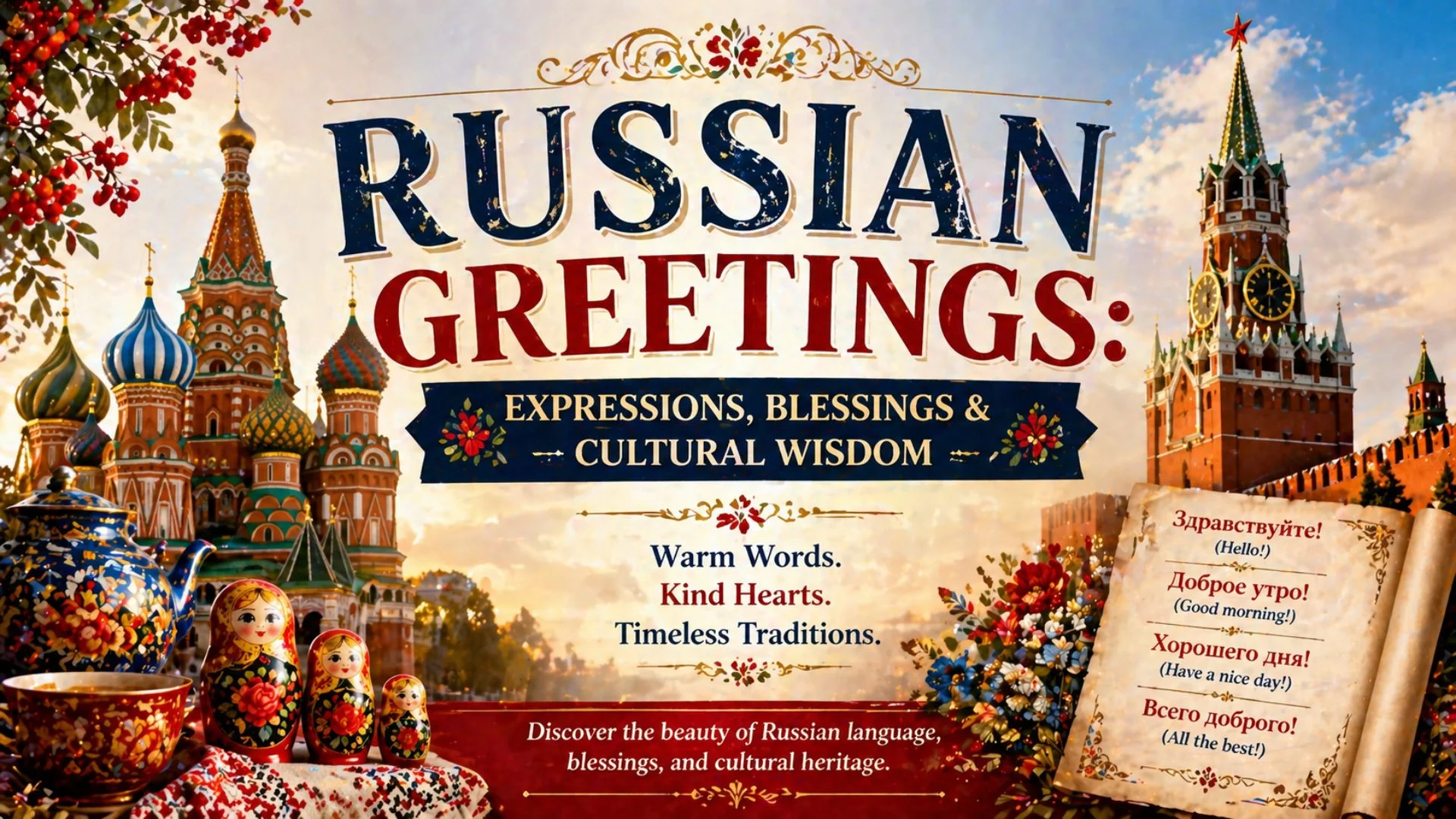
Learning proper russian greetings is the first and most important step toward understanding Russia’s rich culture of warmth and hospitality. Whether you are planning a trip to Moscow, connecting with Russian friends, or simply fascinated by the language, mastering these expressions will open doors and warm hearts. Russian people deeply value sincere greetings, and the right words at the right time show genuine respect and friendliness.
This collection brings together authentic Russian greetings, blessings, and messages for every situation imaginable. From casual hellos between friends to formal greetings for business meetings, you will find exactly what you need. Each greeting includes clear context and pronunciation guidance so you can use it confidently. Let this guide be your companion as you explore the beautiful world of Russian communication and cultural respect.
What is the single most important Russian greeting to learn first
The most important russian greetings to learn first is “Zdravstvuyte” which means hello in formal situations. This greeting works in almost any situation, from casual encounters with strangers to formal business settings. It is safe, respectful, and universally understood across Russia and other Russian-speaking countries.
Casual Russian Greetings for Daily Life
These informal expressions are perfect for close friends, family members, and people your own age. Using casual russian greetings helps build stronger relationships and shows you understand social dynamics.
Everyday Morning Greetings
- Zdravstvuy – Hello (casual singular)
- Privet – Hi (very common casual)
- Dobroye utro – Good morning
- Dobryy den – Good day
- Dobryy vecher – Good evening
- Zdorovo – Hey there (slang)
- Salam – Hi (youth slang)
- Hai – Hi (English borrowing)
- Kak dela – How are things
- Kak zhizn – How is life
Afternoon Casual Greetings
- Privetiki – Hey hey (very cute/casual)
- Dobrogo vremeni sutok – Good time of day
- Kak sam – How are you (to male)
- Kak sama – How are you (to female)
- Kak vy – How are you (respectful but casual)
- Chto novogo – What’s new
- Kak pozhivayesh – How are you living
- Kak tvoyi dela – How are your things
- Chto sluchilos – What happened (concerned greeting)
- Davno ne videlis – Long time no see
Casual Greetings for Close Friends
- Kak ty – How are you (singular familiar)
- Nu kak ty – So how are you
- Kak nastroeniye – How is your mood
- Chto delayesh – What are you doing
- Gde propadal – Where have you been
- Na svyazi – In touch (online greeting)
- Kak ty tut – How are you here
- Vsyak – Everything okay (short form)
- Normalno – Normal (as greeting)
- Poryadok – Everything is in order
Formal Russian Greetings for Business & Ceremonies
Respect and hierarchy matter in Russian business culture. These formal russian greetings will help you make excellent first impressions and maintain professional relationships.
Business Morning Greetings
- Zdravstvuyte – Hello (formal)
- Dobroye utro – Good morning (formal)
- Rada vas videt – Glad to see you (female speaker)
- Rad vas videt – Glad to see you (male speaker)
- Pozvolyte predstavitsya – Allow me to introduce myself
- Menya zovut – My name is
- Ochen priyatno – Very pleased to meet you
- Ya rad s vami poznakomitsya – I am glad to get to know you (male)
- Ya rada s vami poznakomitsya – I am glad to get to know you (female)
- Privetstvuyu vas – I greet you
Business Meeting Greetings
- Uvazhayemyye kollegi – Dear colleagues
- Gospoda – Gentlemen
- Razreshite poprivetsvovat – Allow me to greet you
- My rady vas privetstvovat – We are glad to welcome you
- Blagodaryu za vstrechu – Thank you for the meeting
- Spasibo chto prishli – Thank you for coming
- Prihodite pozhaluysta – Please come in
- Chuvstvuyte sebya kak doma – Make yourself at home
- My vas slushayem – We are listening to you
Formal Responses and Acknowledgments
- Bolshoye spasibo – Big thank you
- Spasibo bolshoye – Thank you very much
- Ochen vam blagodaren – Very grateful to you (male)
- Ochen vam blagodarna – Very grateful to you (female)
- Ne za chto – It is nothing
- Pozhaluysta – You are welcome (or please)
- Vsegda pozhaluysta – Always welcome
- Ya vam ochen priznatelen – I am very grateful to you (male)
- Ya vam ochen priznatelna – I am very grateful to you (female)
- Eto bylo priyatno – It was pleasant
Seasonal Russian Greetings for Holidays & Events
Seasonal russian greetings show awareness of cultural traditions. Russian people deeply celebrate holidays and have special words for each occasion.
New Year Greetings
- S novym godom – Happy New Year
- S nastupayushchim – Happy upcoming (New Year)
- Pozdravlyayu s novym godom – Congratulations on New Year
- Zhelayu schastya v novom godu – I wish happiness in the new year
- S novym schastyem – With new happiness
- Vsego samogo luchshego v novom godu – All the best in the new year
- Pust novy god prineset radost – May the new year bring joy
- S prazdnikom – Happy holiday
- S novym godom i rozhdestvom – Happy New Year and Christmas
- Zhelayu ispolneniya zhelaniy – I wish your wishes come true
Christmas Greetings
- S rozhdestvom – Merry Christmas
- S rozhdestvom khristovym – Merry Christmas of Christ
- Pozdravlyayu s rozhdestvom – Congratulations on Christmas
- Svetlogo rozhdestva – Bright Christmas
- Rozhdestvenskikh chudes – Christmas miracles
- Pust rozhdestvo prineset mir – May Christmas bring peace
- Teplogo rozhdestvenskogo vechera – Warm Christmas evening
- Rozhdestvenskogo schastya – Christmas happiness
- S rozhdestvom i novym godom – Merry Christmas and Happy New Year
- Blagoslovennogo rozhdestva – Blessed Christmas
Easter Greetings
- Khristos voskres – Christ is risen
- Voistinu voskres – Indeed he is risen
- S paskhoy – Happy Easter
- Svetloy paskhi – Bright Easter
- Pozdravlyayu s paskhoy – Congratulations on Easter
- Pust paskha prineset radost – May Easter bring joy
- Schastlivoy paskhi – Happy Easter
- Blagoslovennoy paskhi – Blessed Easter
- Paskhalnoy radosti – Easter joy
- S prazdnikom paskhi – Happy Easter holiday
Birthday Greetings
- S dnyom rozhdeniya – Happy birthday
- Pozdravlyayu s dnyom rozhdeniya – Congratulations on your birthday
- Vsego samogo luchshego v den rozhdeniya – All the best on your birthday
- Zhelayu schastya v den rozhdeniya – I wish happiness on your birthday
- Bud zdorov – Be healthy (to male)
- Bud zdorova – Be healthy (to female)
- Dolgoletiya vam – Long life to you
- Ispolneniya mecht – Fulfillment of dreams
- Radosti i ulybok – Joy and smiles
- S dnyom rozhdeniya dorogoy – Happy birthday dear (to male)
- S dnyom rozhdeniya dorogaya – Happy birthday dear (to female)
Russian Blessings for Health & Long Life
These traditional russian greetings carry deep wishes for wellness and longevity. Russian blessings often come from cultural and spiritual traditions.
Daily Health Blessings
- Bud zdorov – Be healthy (common blessing)
- Na zdorovye – To your health
- Krepkogo zdorovya – Strong health
- Zhelayu vam zdorovya – I wish you health
- Beregi sebya – Take care of yourself
- Ne boley – Don’t get sick
- Zdorovya i schastya – Health and happiness
- Vsego nailuchshego – All the best
- Krepkogo imuniteta – Strong immune system
- Dolgikh let zhizni – Long years of life
Long Life Blessings
- Dolgikh let – Long years
- Mnogikh let zhizni – Many years of life
- Do sta let – Until one hundred years
- Zhelayu dolgoletiya – I wish longevity
- Pust zhizn dlitsya – May life last long
- Zdorovya na mnogo let – Health for many years
- Zhivi dolgo i schastlivo – Live long and happily
- Dolgoletiya i protsvetaniya – Long life and flourishing
- Pust bog khranit vashi gody – May God preserve your years
- Krepkogo zdorovya na dolgiye gody – Strong health for many years
Recovery and Healing Blessings
- Vyzdoravlivay skoreye – Get well soon
- Popravlyaysya – Get better (casual)
- Zhelayu skoreyshego vyzdorovleniya – I wish for speedy recovery
- Ne boley bolshe – Don’t be sick anymore
- Vse budet khorosho – Everything will be fine
- Skorogo vyzdorovleniya – Quick recovery
- Pust bolezn otstupit – May the illness retreat
- Vyderzhki i terpeniya – Strength and patience
- Zdorovya vashemu organizmu – Health to your body
- Vyzdoravlivayte pozhaluysta – Please get well
Russian Messages of Gratitude & Appreciation
Expressing thanks properly is essential in Russian culture. These russian greetings of gratitude will help you show sincere appreciation.
Everyday Thank You Messages
- Spasibo – Thank you
- Spasibo bolshoye – Thank you very much
- Bolshoye spasibo – Big thank you
- Ochen spasibo – Very thank you
- Spasibo ogromnoye – Huge thank you
- Blagodaryu – I thank (formal)
- Serdechnoye spasibo – Heartfelt thank you
- Spasibo ot vsego serdtsa – Thank you from all my heart
- Spasibo za pomoshch – Thank you for help
- Spasibo za vnimaniye – Thank you for attention
Deep Appreciation Messages
- Ya ochen blagodaren vam – I am very grateful to you
- Priznatelen vam – Grateful to you (male)
- Priznatelna vam – Grateful to you (female)
- Ot vsey dushi blagodaryu – From all my soul I thank
- Nizkiy poklon vam – Low bow to you
- Vechnaya blagodarnost – Eternal gratitude
- Ya vash dolzhnik – I am your debtor
- Spasibo chto vy yest – Thank you that you exist
- Vy menya ochen vyruchili – You really helped me out
- Ya eto ne zabudu – I will not forget this
Thank You for Hospitality
- Spasibo za gostepriimstvo – Thank you for hospitality
- Bylo ochen uyutno – It was very cozy
- Spasibo za tepliy priyom – Thank you for warm welcome
- Mne vse ochen ponravilos – I liked everything very much
- Spasibo za ukrashennyy stol – Thank you for the decorated table
- Vy prekrasnyye khozyayeva – You are wonderful hosts
- Ochen bylo vkusno – It was very tasty
- Spasibo za dushevnost – Thank you for the warmth
- Ya chuvstvoval sebya kak doma – I felt like at home
- Priznatelyen za vash priyom – Grateful for your reception
Russian Greetings for Difficult Times
During hard moments, gentle russian greetings provide comfort and show you care. These expressions help you support others with respect.
Condolence Greetings
- Prinimite soboleznovaniya – Accept my condolences
- Moi soboleznovaniya – My condolences
- Tragediya potryasayushchaya – The tragedy is shocking
- Razdelyayu vashu bol – I share your pain
- Svetlaya pamyat – Bright memory
- Tsarstvo nebesnoye – Kingdom of heaven (for deceased)
- Pust zemlya budet pukhom – May the earth be soft
- Molitvenno o skorbi – Praying about grief
- Derzhites – Hold on
- My s vami v eti trudnyye dni – We are with you in these difficult days
Sympathy for Illness
- Ne grusti – Do not be sad
- Vse naydetys – Everything will work out
- Vyzdoroveyesh obyazatelno – You will definitely get well
- Pust bolezn proydet – May the illness pass
- Ya veryu v tvoyo vyzdorovleniye – I believe in your recovery
- Ty silnyy chelovek – You are a strong person
- Vse budet khorosho – Everything will be fine
- Krepis – Be strong
- Zdravstvuy – Be healthy (as encouragement)
- Ty spravishsya – You will cope
Comforting Words for Failure
- Ne rasstraivaysya – Do not be upset
- Bývayet i khuzhe – It could be worse
- Eto ne konets sveta – It is not the end of the world
- V sleduyushchiy raz poluchitsya – Next time it will work out
- Glavnoye chto ty zhiv – The main thing is you are alive
- Oshibki – eto opyt – Mistakes are experience
- Ne vse srazu – Not everything at once
- Ty molodets chto poproboval – You are great for trying
- Zhizn prodolzhayetsya – Life continues
- Zavtra budet luchshe – Tomorrow will be better
Support During Stress
- Otdohni – Rest (casual)
- Peredyshka nuzhna vsem – Everyone needs a break
- Ne beri v golovu – Do not take it to heart
- Vse proydet – Everything will pass
- Dyshi glubzhe – Breathe deeper
- Ty ne odin – You are not alone
- Ya ryadom – I am nearby
- Pomosh ryadom – Help is nearby
- Sdelay pereryv – Take a break
- Vyspys i vse naydetsya – Sleep and everything will work out
Short Russian Greetings for Social Media
These bite-sized russian greetings are perfect for Instagram, Facebook, Twitter, or WhatsApp status updates.
One-Line Russian Greetings
- Vsem privet – Hello everyone
- Dobroye utro vsem – Good morning everyone
- Khoroshego dnya – Good day
- Khoroshego vechera – Good evening
- Legkoy nedeli – Easy week
- Khoroshikh vykhodnykh – Good weekend
- Do vstrechi – Until meeting
- Schastlivogo puti – Happy journey
- Priyatnogo appetita – Bon appetit
- Spokoynoy nochi – Good night
Greetings for Instagram Captions
- Zhizn prekrasna – Life is beautiful
- Raduytes kazhdomu dnyu – Rejoice in every day
- Ulybaytes chashche – Smile more often
- Lyubov krugom – Love all around
- Schastye vnutri – Happiness inside
- Blagodarnost menyaet vsyo – Gratitude changes everything
- Novy den novyye vozmozhnosti – New day new opportunities
- Sveti kak solntse – Shine like the sun
- Dobrota spas mir – Kindness saves the world
- Chudesa sluchayutsya – Miracles happen
Greetings for WhatsApp Status
- Kak nastroyeniye – How is your mood
- Vsyak – Everything okay
- Na svyazi – In touch
- Budem zdorovy – Let us be healthy
- Lyubvi i tepla – Love and warmth
- Dobra i sveta – Goodness and light
- Spokoystviya i radosti – Peace and joy
- Uspekha i udachi – Success and luck
- Sily i terpeniya – Strength and patience
- Very i nadezhdy – Faith and hope
Perfect Greetings for Facebook Posts
- Zhelayu vsem prekrasnogo dnya – I wish everyone a beautiful day
- Pust den budet dobrym – May the day be kind
- Blagodaryu za vnimaniye – Thank you for attention
- Ya rad chto vy u menya yest – I am glad that I have you
- Druzya vy luchshiye – Friends you are the best
- Schastya vashim semyam – Happiness to your families
- Mira vashim domam – Peace to your homes
- Blagopoluchiya vam – Prosperity to you
- Uyuta i tepla – Coziness and warmth
- Radosti v serdtse – Joy in the heart
Greetings for Email Signatures
- S uvazheniyem – With respect
- S teplom i dobrom – With warmth and kindness
- Vsego nailuchshego – All the best
- S dobrymi pozhelaniyami – With good wishes
- Dobrykh vam dney – Good days to you
- Spokoynykh vam vykhodnykh – Peaceful weekend to you
- Uspekhov v rabote – Success at work
- Krepkogo vam zdorovya – Strong health to you
- Schastya i lyubvi – Happiness and love
- Do svyazi – In touch
Proper Etiquette: Tone, Body Language & Context
Using the right russian greetings goes far beyond just saying the words. Your tone of voice, facial expression, and body language all communicate respect or disrespect. When greeting someone formally, maintain eye contact and offer a firm handshake. Russian handshakes are strong but not aggressive. Remove your gloves before shaking hands. Among close friends, a hug or a pat on the back is common between men, while women may kiss cheeks.
The context matters tremendously. Never use casual greetings like “Privet” with your boss or a stranger. Save informal expressions only for close friends and family members. When in doubt, always choose the more formal “Zdravstvuyte.” Russian people will appreciate your effort to be polite, even if you make small mistakes. Pay attention to how others greet you and follow their lead. Also remember that Russians often greet with “Zdravstvuyte” even when entering elevators or small shops.
Common Mistakes to Avoid When Using Russian Greetings
Many beginners make the mistake of using “Privet” with people they have just met. This greeting is only for close friends and family. Another common error is forgetting to change greetings based on time of day. “Dobroye utro” is only for morning, “Dobryy den” for afternoon, and “Dobryy vecher” for evening. Using the wrong one sounds strange to native speakers.
Do not greet someone without making eye contact. Russians consider eye contact a sign of honesty and respect. Also, avoid smiling too much during formal greetings. A serious expression shows respect. In business settings, excessive smiling can seem unprofessional. Finally, do not forget to ask “Kak dela” after greeting. Russians typically expect this follow-up question. Answer briefly with “Normalno” or “Khorosho” even if things are not perfect.
Frequently Asked Questions About Russian Greetings
What is the difference between Zdravstvuyte and Privet?
Zdravstvuyte is formal and used with strangers, elders, and in professional settings. Privet is casual and used only with close friends and family. Never use Privet with someone you do not know well.
Can I use Dobryy den at any time of day?
No, Dobryy den is only for afternoon from about noon until evening. Before noon use Dobroye utro. After sunset use Dobryy vecher. Using the wrong time greeting sounds strange to native speakers.
Do I need to shake hands when greeting in Russia?
Yes, handshakes are expected in formal and business settings. Men always shake hands when greeting. Women may shake hands or simply nod. Remove your gloves before shaking hands. Never shake hands over a threshold.
What is the proper response to Spasibo?
The standard response is “Pozhaluysta” meaning you are welcome or “Ne za chto” meaning it is nothing. In casual settings, you can simply nod and smile. Both responses are equally acceptable.
How do I greet someone on the phone in Russian?
Say “Allo” for all phone calls. Then say “Zdravstvuyte” for formal calls or “Privet” for casual calls with friends. State your name if the person might not recognize your voice. Never skip the greeting on phone calls.
Is it rude to use casual greetings with strangers?
Yes, using casual greetings with strangers can seem disrespectful. Always use formal greetings like “Zdravstvuyte” or “Dobryy den” when meeting someone for the first time. Politeness is highly valued in Russian culture.
What is the most respectful way to say goodbye?
“Do svidaniya” is formal and works in most situations. For very formal settings, use “Vsego vam dobrogo” meaning all good to you. Among friends, “Poka” or “Do vstrechi” works well.
Can I use English greetings in Russia?
Many young Russians understand “Hello” and “Thank you.” However, using proper Russian greetings shows respect and effort. Russians will appreciate your attempt to speak their language, even with mistakes. Older generations may not understand English at all.
Conclusion
Mastering russian greetings opens the door to authentic connections with Russian speakers worldwide. These 550+ phrases cover everything from casual hellos to formal business expressions, seasonal blessings, and heartfelt messages of gratitude. Learning greetings is not just about memorizing words. It is about showing respect, understanding culture, and building genuine relationships. Start with the most common phrases like Zdravstvuyte and Spasibo. Practice them daily. Then gradually add more expressions as you grow confident. Every Russian person will appreciate your effort to speak their language with kindness and respect. Keep learning and keep greeting with an open heart.